'The Walking Dead' Season 6 Episode 13 Review: Humanity and Savagery Co-Exist In 'The Same Boat'
Recap and review of The Walking Dead - Season 6 Episode 13 - The Same Boat:
The Walking Dead has often set forth that the primary antagonists of this world aren't the walkers, but other people. "The Same Boat" explores that thesis by showing that maintaining one's humanity often means permitting, or even engaging in, acts of savagery. This was brilliant, savage television, made all the more effective by the quiet moments of soul-searching, and the harrowing moments of faith.
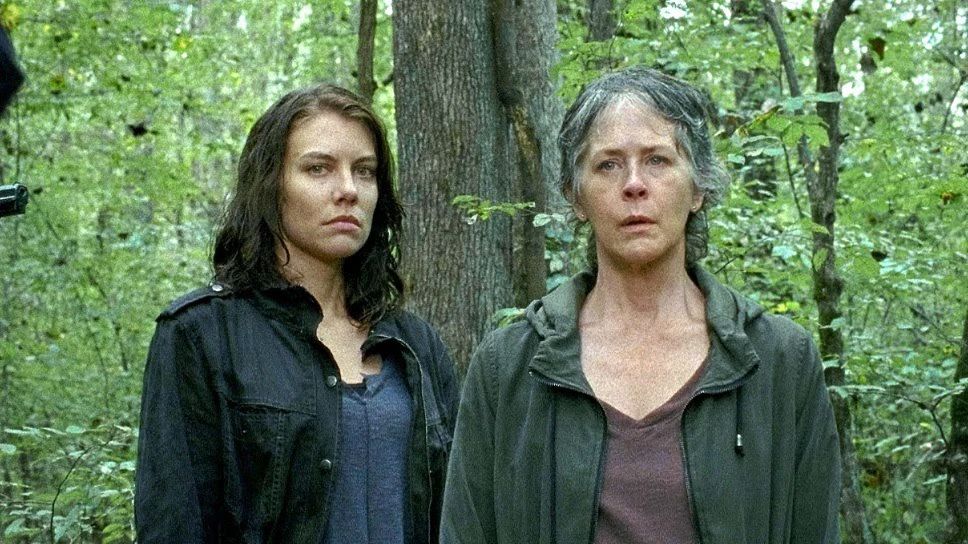
The reason Maggie and Carol are captured in the first place is that, instead of making a run for it after shooting one of Paula's men in the shoulder, Maggie chooses to get in close to finish what they started. This gives Paula and her cohorts the chance to get the drop on the two. Even after she and Carol manage to escape their confines, Maggie insists on seeking out the members of Paula's group, one-by-one, in order to finish the job. In much the same way Paula sees the logic in allowing an enemy to live, Maggie finds logic in killing every single person who poses a threat, regardless of whether or not they can be used as a negotiating tactic down the line. On the one hand, it makes sense to kill Paula's group, whether by setting a walker trap, shooting them in the head, trapping them in a burning room, or impaling them on a piece of rebar, as we see Carol do to Paula at the end (leading to a particularly gruesome death in which Paula is eaten alive by a nearby walker). On the other hand, it might have been wiser to take Paula captive to use as a bargaining chip with Negan. Whether this would have been easier than just slaughtering everyone, we'll never know. But it likely would have taken less of a toll on Carol's sense of humanity, since we're given every indication that Carol really, really didn't want to have to kill Paula. She gives the woman countless opportunities to make a run for it, and when a final brawl becomes inevitable, Carol admits that it isn't death that terrifies her, but this exact moment, having to fight and kill another living person just to survive. It's a character trait that, until the very end of the episode, we don't see reflected in Maggie, who has taken on Rick's scorched earth worldview. And she's taken on that worldview for the same reason Rick has: in much the same way Rick has a son to look out for, so, too, does Maggie have a child to protect. Maggie's repeated insistence to Carol that they have to "finish" this is because, much like Glenn, she doesn't want to have to worry about this down the line. She wants to make the world safe for her baby now, so they can be born into a more peaceful world. Maggie is killing now so, hopefully, she won't ever have to again. It's similar to the sort of pragmatism Paula has, with regards to whether or not to kill, it's simply that Maggie swings in the other direction. She never considers letting Paula's people live, even for a moment. Not even after hearing their life stories about lost babies, dead boyfriends, and late fathers. There's just no way Paula was going to make it out of this episode alive -- and honestly, the episode is stronger for letting that story play out in a single hour, because we get to see the stark contrast between Maggie, Carol and Paula.
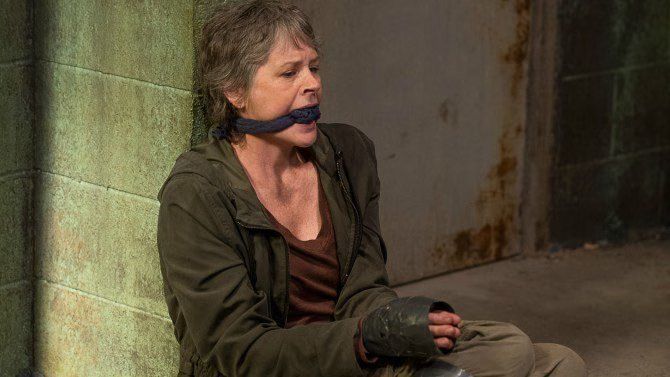
Part of what makes Paula an effective villain is that, in different circumstances, she might not be a villain at all. She's simply a woman who's been shaped by circumstances into someone entirely separate from the person she'd been in the pre-walker world. Paula is no longer the demur secretary tasked with bringing endless coffee to her oafish boss. She's the woman who leads her own troop, and the woman who's killed into double digits to stay alive. It makes sense why Paula has no respect for Carol, whom she sees as weak and pathetic, holding onto the image of a God who couldn't possibly exist, if He allowed the world to come to this. This, of course, ignores that it's all a ploy on Carol's part to lure Paula into a false sense of security, but even if it isn't, Paula's system of beliefs isn't any more valid than Carol's if they've both managed to survive to the same point thus far. And Carol picks up on that, recognizing that Paula is really the one who's afraid to die, because her life is the only thing left to be taken from her. Her husband and four daughters are gone, she isn't particularly close with anyone in her troop (not even her cohort-with-benefits whom Carol shoots in the arm at the top of the episode), and she doesn't appear to gain any sense of reward out of anything she's doing. Carol, on the other hand, has an entire community of people she cares about, while Maggie has a husband and a baby on the way. Even though she's lost her daughter, Carol thrives because she's made a choice, as Maggie puts it. She isn't just surviving, she's living, which is more than can be said for Paula. Of course, Carol would rather be able to escape without incident, but circumstances are such that she can't resist the inevitability of what she must do. So the question, then, becomes whether or not Carol can do the horrible things she must, yet still retain her humanity. It's a question that is yet to be answered, although it's clear Carol is trying, judging by how hard she gripped her cross at the end of the episode. And, for her part, while Maggie was pragmatically gung-ho about murdering everyone in Paula's group, it's similarly clear that she's struggling with the savagery of what she's done, telling Glenn that she just can't do this anymore (nearly getting stabbed in the stomach also had a lot to do with it, as Maggie's choices could have cost her the baby). With that said, I doubt this will be the last blood Maggie and Carol must shed, nor will it be the last for Rick's group. When Primo makes the declaration that he is Negan, a declaration that members of Paula's group had made as a mantra of sorts ("We're all Negan"), Rick takes it literally and shoots the man in the head (albeit not before expressing how sorry he is that it's come to this). Although they've neutralized yet another arm of Negan's group, they've still yet to kill the man himself. And it's doubtful that Negan, once he arrives, will show any of the remorse Rick and his group have shown about the deeds they've done. Ultimately, "The Same Boat" is one of the best episodes of The Walking Dead this season from a thematic standpoint, and it bodes well for the rest of the season that remains.
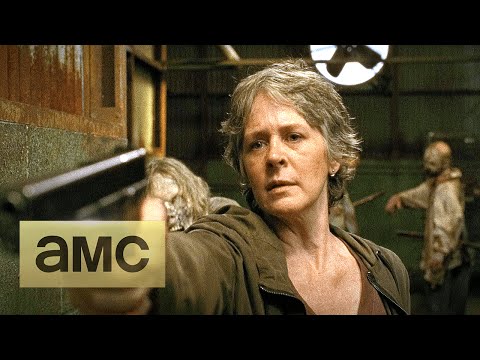

But what did you think of The Walking Dead Season 6 Episode 13, "The Same Boat"? Sound off in the comments!
And for more on The Walking Dead, read our review of last week's stunning "Not Tomorrow Yet"!