Reign - Recap: The Death of Me
Recap and review of Reign - Season 2 Episode 14 - The End of Mourning:
I love the idea of Reign being a show focused on palace intrigue and the stability of nations, but I also admit I'm easily carried away by its romantic entanglements. "The End of Mourning" is an episode of political triangles, yes, but it's also an episode of love triangles, resulting in a densely plotted hour that doesn't particularly suffer for how crowded it is.
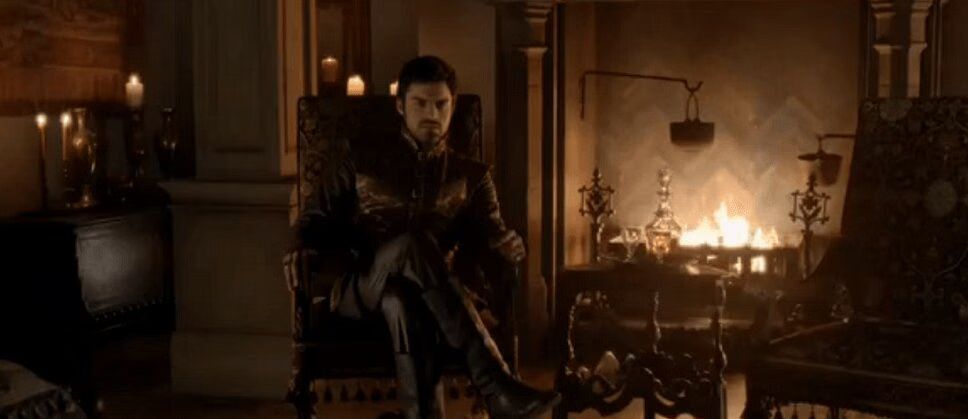
But the story is far more complicated than what the dinner accusation scene suggests. As we discover, the Bourbons actually DID have Henry poisoned. Except it wasn't Condé ordering it done, it was Antoine. This is where the second of the night's love triangles comes into play, as Narcisse (Craig Parker) attempts to further ingratiate himself to Catherine (Megan Follows), who is already being courted by a returning Duke of Guise (Gil Darnell), Mary's uncle. At first, the Duke seems a bit too happy to find Catherine widowed, suggesting that marrying him would constitute a step up for her. For her part, Catherine isn't convinced, nor is she exactly drawn to Narcisse either. Granted, it doesn't stop the men from being cold around one another. And so it's no big surprise when we discover that Narcisse has helped Antoine frame the Duke for the poisoning, since it removes a rival for Catherine's affections, and earns him enough gold from the King of Navarre to potentially buy back his lost lands. It's an incredibly well-executed storyline, as it essentially results in a double twist.
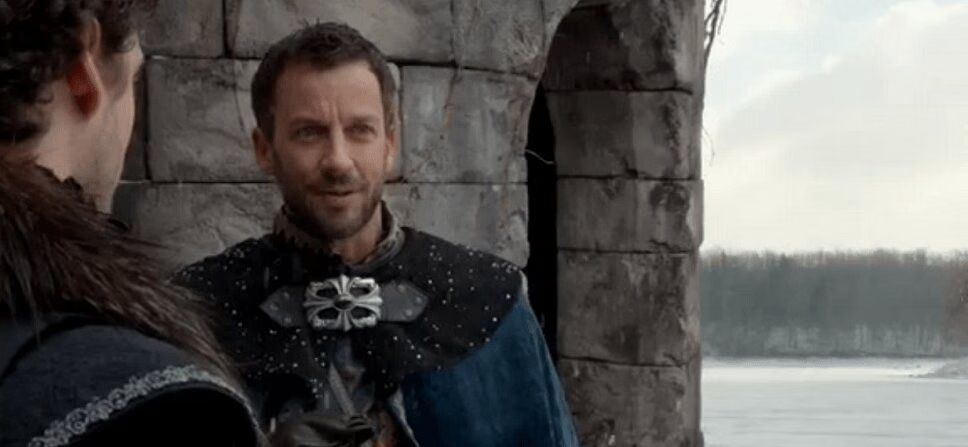
On the one hand, the Duke being the poisoner and indirectly causing the assault on Mary through the domino effect of Henry's death makes a certain grim, narrative sense. So I didn't question when it was revealed that the Duke was the culprit, particularly since Catherine apparently had enough evidence of the Duke's involvement to order his assassination, confident that she had the right man. This is why it's such a big shock when it's revealed that the Duke was an innocent man, and that Antoine was essentially able to get away with poisoning the king thanks to his uneasy alliance with Narcisse. Granted, Condé is still clever enough to figure it all out, going as far as to confront his brother about it. As it turns out, this has all been part of his revenge plot to take down the Valois dynasty and raise the Bourbons to equal status. This, despite Bash explaining that he had no idea the man he killed during the wars was Antoine's brother. As Bash states, he was simply told by Henry that Marcus was a traitor who needed to be killed. He was following the orders of his father and king, and while Bash isn't exactly innocent of killing Marcus, it's not as if he could have refused Henry. But Antoine doesn't see the distinction, hence his attempts to systematically ruin House Valois from the inside out, and that includes attempting to seduce Kenna (Caitlin Stasey), who is made increasingly uncomfortable by King Antoine's advances. This is where the third love triangle of the evening comes into play, since Antoine is looking to further avenge Marcus by ruining Bash's marriage. In essence, every romance in play on tonight's episode orbits the political intrigue at its center.
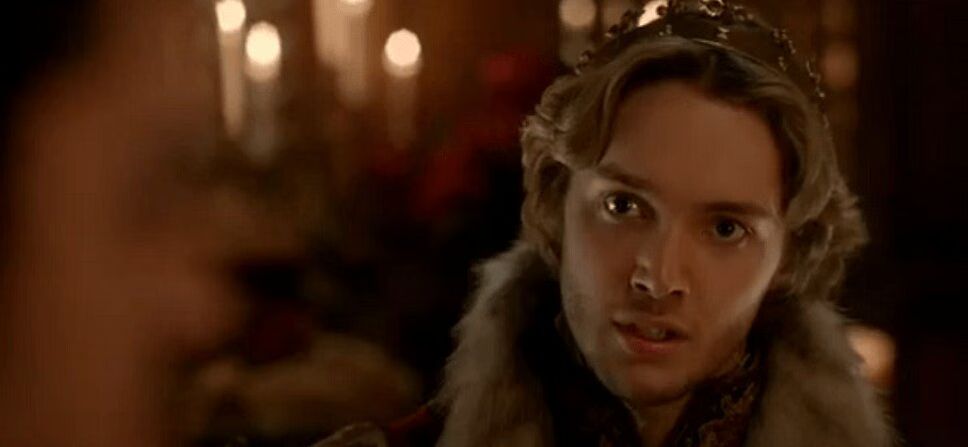
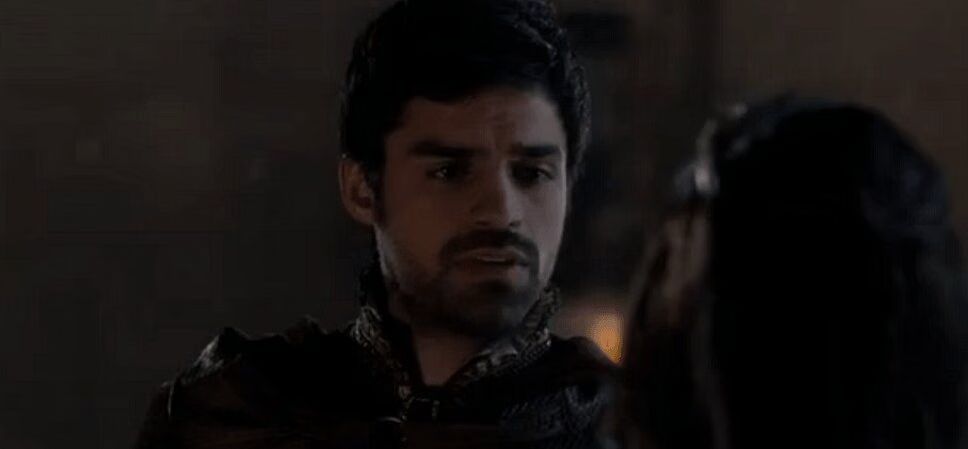
And yet, there's still the possibility of love developing here. Aside from the storyline in which Francis decides to recommit to his friendship with Lola, which suggests much more than the familial bond they both claim to want with one another, there's the show-closing scene in which Mary seeks out Condé to let him know he wasn't exactly wrong in assuming she had feelings for him too. Mary admits that she envisioned Condé with another person, and even envisioned Condé dead after he came under suspicion for treason, and realized those thoughts were too much to bear. She comes perilously close to admitting that she feels the same way he does, but Mary never actually says those three little words. Perhaps inspired by Mary's words of affection, Condé launches into a passionate speech about how he feels around Mary, noting that he notices every breath she takes when he's around her -- a line that sounded far better in execution than in theory. It speaks volumes of Teale's talent that he's able to make these love declarations continuously work, and I'm loving how Kane is portraying Mary's attempts to resist what she's feeling. She remains stoic throughout, but you can see cracks in her facade as she starts to tear up at Condé's words. And yet, that passion is leavened with a sense of pragmatism. When Condé says Mary isn't really married anymore, Mary firmly reminds him that yes she frigging is, and she's not going to do anything to compromise her role as wife and queen, no matter what it is she feels for Condé. And I love that choice, depicting Mary as a woman capable of great passion, but possessed of the control to resist it, for the greater good. As Mary says, she doesn't have the luxury to stray from marriage the way a man or a king does. She has to remain faultless, and so she does. It's a wonderful subversion of expectations, since one would think a kiss would have happened there, what with the nighttime setting and the softly-falling snow. But it simply ends with Mary telling Condé, "You're going to be the death of me. And I of you." Mary leaves Condé confused, and it's a confusion she apparently carries in her own heart as well, since she doesn't have the freedom to act on her feelings. Not as a married woman, and certainly not as a queen.
"The End of Mourning" is my favorite episode of the season so far, even though it features a largely useless storyline in which Greer (Celina Sinden) accidentally becomes a madam after she sets up a down-on-his-luck gentleman with her new hooker neighbor. I guess it's sort of nice to check in with Greer, to keep her fresh in the minds of viewers, but this story just didn't feel of a piece with the rest of the episode. Normally, that wouldn't be as much of a problem, except this was one episode that really hit the mark in just about every other aspect. Reign is working wonders at reclaiming whatever goodwill its narrative lost in the first half of this season following Mary's rape, and I find myself increasingly excited for each new episode, particularly as the intrigue deepens.