'Doctor Who' Review: Excellent 'The Girl Who Died' Explains the Twelfth Doctor's Face
Recap and review of Doctor Who - Series 9 Episode 5 - The Girl Who Died:
Doctor Who is doing a bit of a throwback structure this season, following the old multi-episode serial format of the earliest seasons. "The Girl Who Died" is part one in yet another "To Be Continued" installment, yet it offers one of the more intriguing premises of the series so far: to what extent can The Doctor bend the laws of time and space, without reaping terrible consequences?
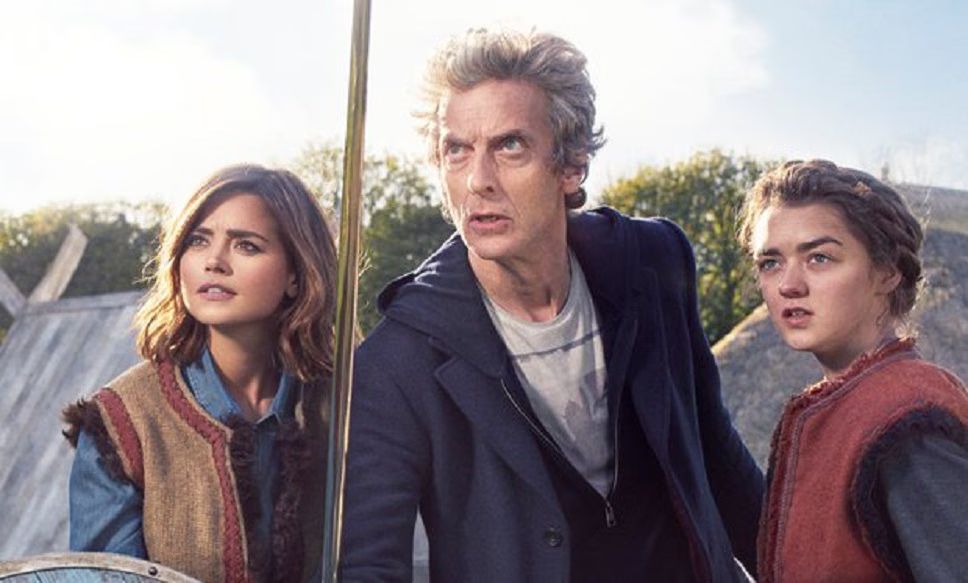
Early into the Twelfth Doctor's run, The Doctor wonders why he chose this particular face, out of all the possible faces into which he could have regenerated. At the time, this was an attempt at loosely addressing Capaldi's earlier appearance in the 2008 Doctor Who episode, "The Fires of Pompeii", in which he played the doomed Lucius Caecilius. In that serial, the Tenth Doctor (David Tennant), at the behest of companion Donna Noble (Catherine Tate), opts to save Caecilius and his family from the inevitable eruption of Mount Vesuvius. In "The Girl Who Died", the Doctor sees his reflection in the water and is reminded of the sacrifice he made in saving Caecilius, and realizes that he subconsciously chose this face as a reminder, "I'm the Doctor. And I save people. And if anyone happens to be listening, and you have any kind of a problem with that, to Hell with you!" It's a bold declaration, and one of Capaldi's more powerful moments, since that declaration comes at the end of a self-pitying speech in which The Doctor gives himself grief over his litany of failures. It makes it all the more understandable why The Doctor ultimately chooses to go back and save Ashildr after she dies from heart failure during the climactic battle. He sees this as a chance not to change history, but rather to do as Donna Noble once implored him. Not to play the ultimate decider of all fates, but rather to save "just someone. Not the whole town. Just save someone."
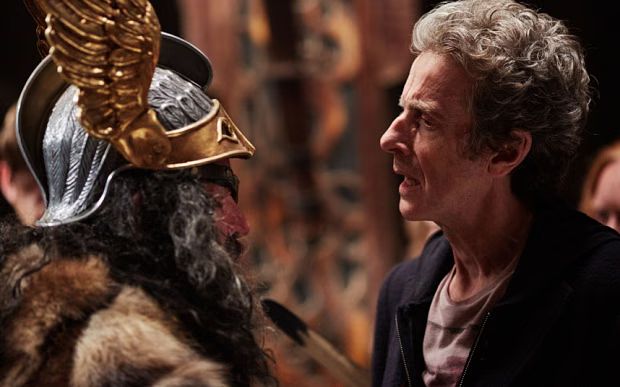
And so he does, using Mire technology to revive her. Of course, there are consequences to this decision. The device he uses to save Ashildr is a chip that dissolves in the skin and repairs the body. But it's not really designed for human bodies, at least not until the Doctor reprograms it. As a result, the chip will now keep healing her body. Forever. As The Doctor explains, he's made Ashildr "functionally immortal," which is why he lives a second chip with her, rationalizing that because immortality is so lonely, she's likely going to want to immortalize someone with her. Someone she can't bear to lose. As the episode closes, we get a sweeping shot of Ashildr, smiling out on the landscape as the world around her slowly changes. And, sure enough, as the years churn by, that smile disappears, leaving only the simultaneously sorrowful and hollow look of a girl who's lived too long in relative solitude. It's a terrific cliffhanger, because we're not really sure what to make of that look she gives at the end. Does she hate The Doctor for what he did to her? Will she come after him? On whom did she use the second Mire chip, if at all? Sure, this episode answers the "Why does the Twelfth Doctor look like Caecilius?" question, but it leaves several more interesting mysteries in its place. This is perhaps the most excited I've been for the second half of a two-parter in some time.
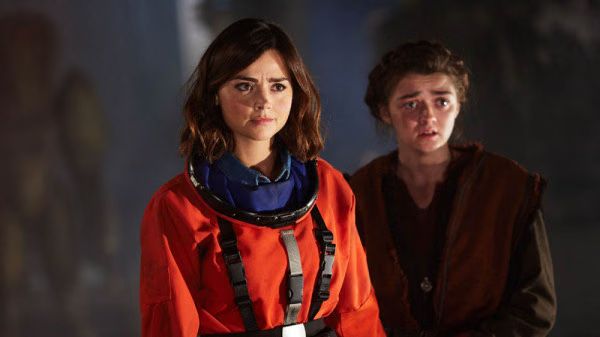
All in all, this was a terrific episode of Doctor Who, as "The Girl Who Died" was anchored by strong performances by Capaldi and Williams, who makes a strong case for why she might make a fine companion (seriously, has The Doctor ever had a companion nearly as old as he is? No, really, I can't recall off-hand). This two-parter will have a high bar to clear if it's looking to surpass the first installment, but if any show could do it, it's Doctor Who.

But what did you think of Doctor Who, "The Girl Who Died"? Sound off in the comments!