Doctor Who - Mid-Season Finale - Recap and Review - The Angels Take Manhattan
Yeah, I cried. What of it? The Doctor did too.
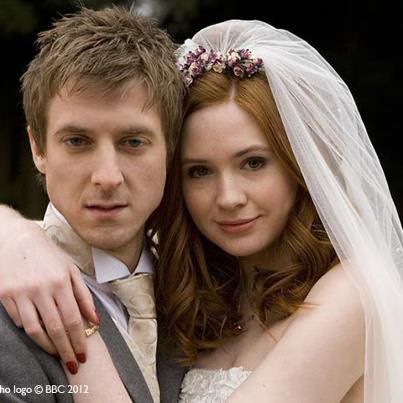
The mid-season finale of Doctor Who is a gut-punch unlike any the show has ever seen. "The Angels Take Manhattan" has been hyped for weeks as the final episode for companions Amy Pond (Karen Gillan) and Rory Williams (Arthur Darvill), and though the nature of their departure has been kept under wraps, not a lot of fans were expecting that their ending would be as final as it ultimately turned out to be. There's almost no way to bring them back, which is exceedingly rare for Doctor Who, where the narrative freedoms of time travel allows the series to bring back any character at any time (hell, look no further than River Song, whose first appearance, in series 4's two-parter "Silence in the Library"/"Forest of the Dead" is the character's death), however, with the rule that no one can go back in their own timeline, there's basically no loophole for the Ponds. This is, definitively, curtains for Amy and Rory.
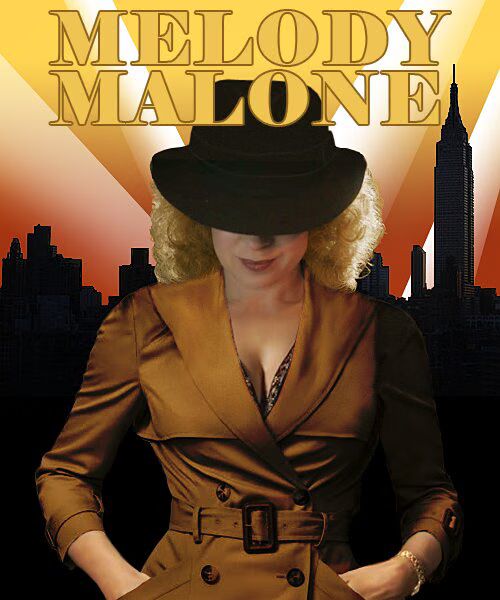
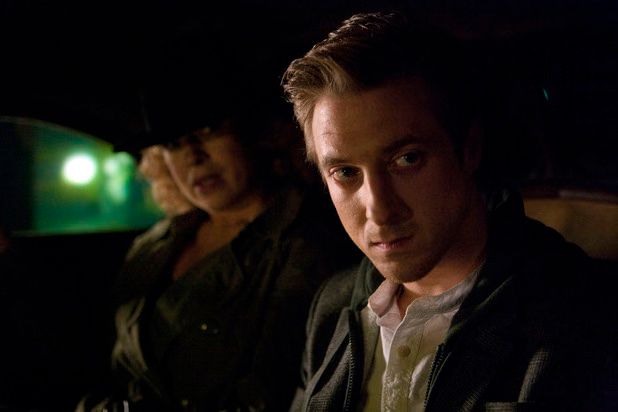
The episode is relatively light in the lead-up to its closing fifteen minutes, following an invasion of the Weeping Angels in 1938 Manhattan. Rory is sent back from the present day after encountering an Angel, and The Doctor and Amy discover this through a pulp detective novel written by Melody Malone, with a cover that calls to mind the elusive River Song (Alex Kingston). The Doctor and Amy immediately set out to save Rory, taking great pains not to read ahead in the book (and I could listen to Karen Gillan pronounce the word "book" all day), lest their futures become fixed and unchangeable.
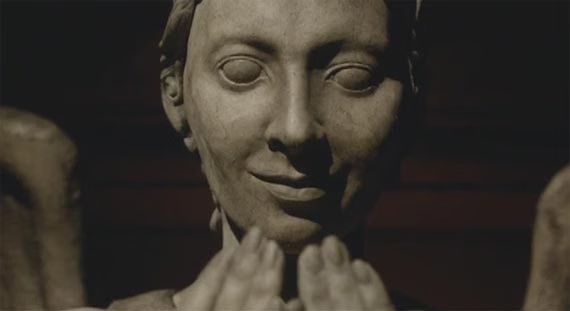
The Angels, for my money, have always been The Doctor's most abjectly terrifying enemies, following the Alfred Hitchcock theory of horror where less is more. The minimalist approach of statues who attack while unobserved is a frightening prospect, and the cherubs that the 1930s crime lord locks Rory in the basement with are all kinds of creepy. It's the episode's tensest horror setpiece, with Rory having nothing but a box of matches to fend off the cherubs' advance. In fact, the only thing more horrifying than the Angels themselves are what they ultimately do to their victims, sending them back in time to "live themselves to death." While some Angel victims have been shown to live long, happy lives in their past condition, the very nature of what they do is a legitimately frightening concept: displacing someone in time, away from their families and friends and any means of identification in their new world, conscripting them to a life of hardship while they seek to discover just how they're going to make due in the past. It's simply an awful thing for any Who villain to do, even if it isn't the enslavement of all life that the Daleks are after, or the processing of organic bodies that the Cybermen seek.
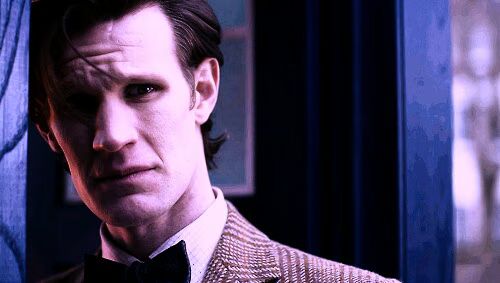
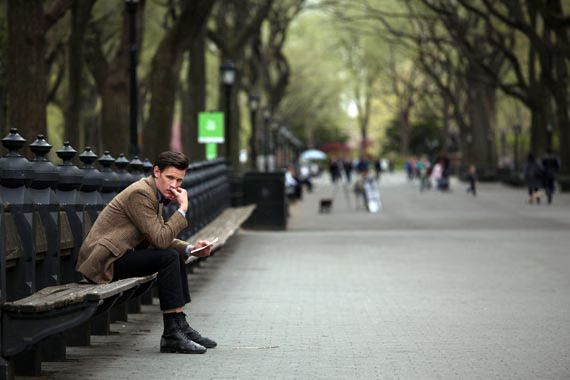
Foremost, the episode concerns itself with endings. An unseen author is writing this book on a typewriter, and we see parts of the story being dictated while the action happens onscreen. We're given to believe it's a private detective named Sam Garner (Rob David) doing the writing, but when he's offed in a the episode's first few minutes, it becomes clear we're dealing with someone else altogether. The Doctor, in the episode's breezy sections in present day New York, rips out the last page of the book before he realizes what it is, rationalizing that he does this with every book he reads, so that the book then never has to end. The Doctor hates endings, and we have roughly forty years of evidence in that regard, with regenerations, companions coming and going, and friends living and dying, sometimes right in front of him. Matt Smith is in rare form, as I don't think we've ever seen The Doctor so nakedly desperate as in "The Angels Take Manhattan." Throughout the duration of the episode, from pretty much the moment he realizes that the book has the ability to cement their futures into an unalterable fixed point, he's on a warpath to prove that futures can be changed, particularly when he reads the chapter headings in the table of contents and sees "Death at Winter Quay" followed immediately by "Amelia's Last Farewell." Smith plays the hell out of The Doctor's gripping fear of losing Amy, an arc which has been built up throughout series 7 so far, elaborated upon last week with The Doctor's promise to Rory's dad that he would never lose them. From the picnic to the Quay, The Doctor gets incrementally closer to losing it, and that freefall kicks into overdrive at The Winter Quay.
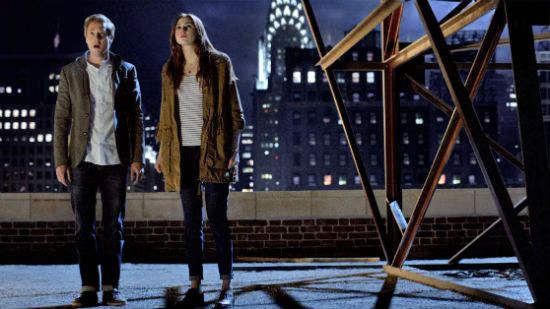
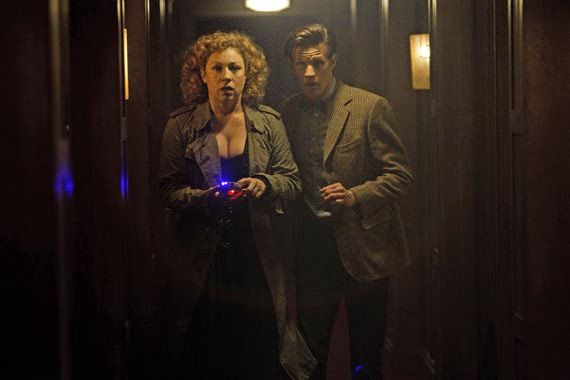
The Winter Quay, as it turns out, is an apartment complex that the Angels have created for use as a battery farm, confining their victims to separate apartments and leeching on their time energy at will. River, in fine form as ever, trading witty rejoinders with her Time Lord husband, tracks Rory to The Winter Quay, and Amy and The Doctor follow. They discover Rory rooting around an apartment, with Angels closing in around the hallways. When The Doctor notices Rory's name on the apartment door, he instructs the Ponds to get out of the apartment before they see anything that will fix their futures to this point in time. But it's too late, as Amy confronts a bedridden old man...the future Rory, consigned to a bed to live out the rest of his days, alone, dying just as Amy comes to hold his hand. There's no way to prevent this from being Rory's fate...unless there were some way to create a paradox to make this entire building "unhappen."
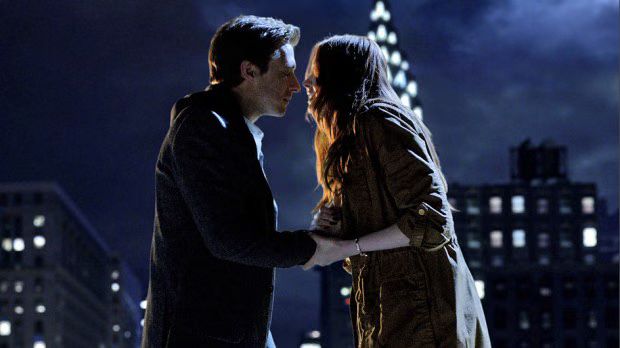
Rory finds that if he jumps off the roof of the building he'll have died twice, in the same building, in one night. Amy refuses to allow Rory to do this alone, and so jumps with him, trusting that they'll create a paradox that will transport them back to the present day. The Doctor begs for them not to jump, but it's too late. Amy and Rory fall, and the building is absorbed in white light...
...transporting them back to the present day graveyard from which they embarked. The gamble has worked, and all anyone wants to do is celebrate at a pub. Until that last kick in the pants, where one last surviving Angel gets Rory, upon realizing that one of the tombstones in the graveyard bears his name. Rory vanishes, and The Doctor grimly breaks the news to Amy that Rory is irretrievably lost. Awash with grief, Amy decides she isn't going to lose Rory, and prepares to let the Angel take her too. The Doctor, through pained tears, begs her not to do this. River, recognizing that this is what's best for her parents, encourages Amy to go. Ultimately, Amy allows the Angel to take her, but not before telling River to be a good girl, and to watch over The Doctor...and, lastly, saying a final farewell to her Raggedy Man. Amy vanishes, and her name appears with Rory's on the tombstone (and we learn she lives another five years after he dies, as if we needed another kick in the daddy bags). The Doctor is inconsolable, until he remembers the final page of the book that he ripped out. He rushes back to Central Park to retrieve it from their picnic basket. It's an Afterword, written by the book's author: Amy. It's a reassurance that she and Rory lived well in the past, and that their love for The Doctor never diminished. There's so much more to the afterword than what I'm saying, as the voiceover closes on 12 year-old Amelia Pond, sitting on her suitcase, waiting for The Doctor who finally comes, but much like any straight recap of the events, what I write couldn't possibly do any of this episode justice. Frankly, I've never been that good at communicating pathos over the internet. It's a hell of an emotional close to the episode, and to the Ponds' time on Doctor Who.
Now, having said all of that, the Ponds are among the series' most well-loved companions, and I just can't imagine this ending isn't going to piss off as many people as it touches. Between Rory's many deaths, Amy's imprisonment in the Pandorica, the theft of their only child, and any number of episode-to-episode troubles they've endured, the universe has kind of given the Ponds the shaft over the course of their time on the series. For many people, the Ponds were the companions on the revived Doctor Who whom many fans felt most deserved a happy ending. Since Doctor Who came back in 2005, it seems as though hardly any of his regular companions end on a happy note, or even in their own time. Rose Tyler got zapped to another dimension (although she had her own private Tennant to keep her company), while Martha Jones is off fighting aliens in the future with Mickey Smith, and we already know how River Song dies.
The only regular companion to get a proper happy ending was Donna Noble, albeit with the caveat that she wouldn't remember The Doctor or her adventures with him. In a sense, she's reverted back to the limited person she'd been before meeting him, but with a winning lottery ticket for millions of dollars. So you could imagine why so many thought that the Ponds would be the exception to the apparent rule of bittersweet partings, having been gradually scaling back on their adventures with The Doctor in preparation for the transition to a normal life.
However, tragically, this entire scenario was triggered not by some hare-brained trek to a hostile galaxy, but by a relatively benign trip to New York City, an afternoon picnic in the park between three close friends. And it's ironic in its tragedy, but also kind of a lame thing to do to these characters. Of course, I understand why Steven Moffat, current series showrunner and the sole credited writer of this episode, did it this way. It's part of the arc he's been telling since series 5, but it still seems largely unfair. But then, such pathos is good drama, and really, this is what Moffat does. Whether he does it well is a matter of opinion, but the episode's emotional beats were outstanding, and the resolution to the arc was ultimately satisfying, even if it was devastating when whittled down to the brass tacks of what happened. The real kicker is that what happened isn't really The Doctor's fault.
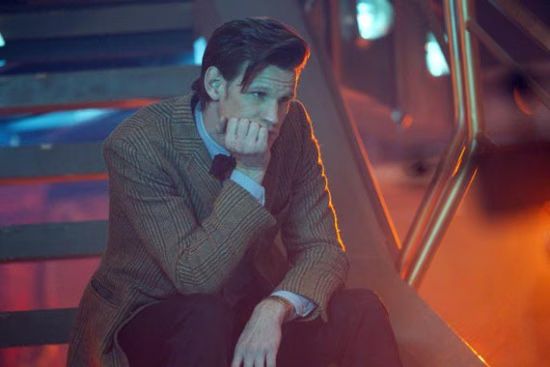
Despite the Ponds' arc having largely been in relation to the effect The Doctor's presence has had in their lives, their demise isn't really a direct result of his influence. He didn't put them in harm's way, it was simply a tragically unlucky break, but it's hard to imagine The Doctor won't be carrying this burden with him as we move forward in series 7. "The Angels Take Manhattan" is successful in isolation, but also in expanding the broader themes we'll be encountering as the series rolls on. Amy and Rory deserved, if not a happy exit, at least an epic one, and that's precisely what they got here. I really can't argue with the execution, particularly where Matt Smith is concerned, as he displayed a rawness of emotion not often seen from Eleven. I would also be remiss if I didn't mention the uniformly excellent period details, as the recreation of late-30s Manhattan is precisely the sort of setting the show so expertly renders. "The Angels Take Manhattan" is simply a very well-made hour of television.
Well, that's it for Doctor Who in 2012, except for the annual Christmas special where, rumor has it, we'll be meeting The Doctor's new companion. The Christmas special is always an excellent, isolated episode rife with enchantment and whimsy. That kind of levity will be desperately needed following the Ponds' exit, whether or not the wound is still fresh, come December. As for now, we can only pour a forty on the sidewalk and indulge in fish fingers and custard in memory of Amelia Pond and Rory Williams.