Bunheads - Season 1 Episode 2 - Recap and Review - For Fanny
Bunheads is the latest show from Gilmore Girls creator Amy Sherman-Palladino. The show premiered last week, so let's quickly recap the pilot: Broadway veteran Sutton Foster plays Michelle Simms, a thirtysomething Vegas showgirl and former ballerina with aspirations deferred by the difficulty an older dancer faces in getting work on the legitimate stage. She sleeps during the day, and she drinks at night after shows, while putting off the advances of the kind, unrelentingly sweet Hubbell Flowers, a middle-aged paramour with a long-standing crush on Michelle. After a disastrous audition, Michelle despairs of her dead-end life, goes out to dinner with Hubbell, gets rip-roaringly drunk, and marries him in a quickie ceremony. She moves with him to his idyllic, coastal small town called Paradise (which, if you've ever seen Gilmore Girls, is basically Stars Hollow with an ocean view) where she gets acquainted with a varied cast of quirky archetypes: Hubbell's mother, an overbearing ballet instructor named Fanny (played by Kelly “Emily Gilmore” Bishop); she also must contend with Hubbell's eccentric, jealous ex-girlfriend, Truly, a master seamstress who owns the local boutique and is equal parts quirky and passive-aggressive. Also among the townsfolk are four of Fanny's students at the Paradise Dance Academy, with whom Michelle has an impromptu bonding session: stuck-up clique-leader Sasha, ditsy Melanie, image-conscious Ginny, and shy, oddball Boo.
The first forty-one minutes of the pilot are fun and loose in a way that only Amy Sherman-Palladino shows tend to be, amongst hour-long dramas these days. It's not as plot-heavy as your average pilot, but it goes a great deal in establishing this world and its attendant quirks. While the plot mechanics of getting Michelle to Paradise play as contrived, insofar as it strains credulity that this acerbic, fast-talking showgirl would elope with a sort-of friend/sort-of suitor she hardly even knows, it works once they get to the sleepy little town and have some one-on-one time amidst the bustle of the wedding reception planned by Fanny, which it seems as that the entire town attends.
Seeing the love develop between Michelle and Hubbell (played by Alan Ruck, perhaps best known as Cameron of Ferris Bueller's Day Off, though he was also a mainstay on 90s stalwart Spin City) promised to be among the more interesting developments to chart. Sure, the final scene, in which Michelle and Fanny go to a bar, have some drinks, and dance to the jukebox, bonding over their mutual affection for the preternaturally sweet Hubbell, is an enjoyable bit of business. However, it was really the potential in watching these two relative strangers develop as husband and wife that seemed to hold the most promise. So while those first forty-one minutes were saccharine sweet, that final minute amounted to a kick in the mouth, as Truly barges into the bar, frantic, telling of how Hubbell went out looking for Michelle and Fanny, got into a car accident, and well...fade to black.
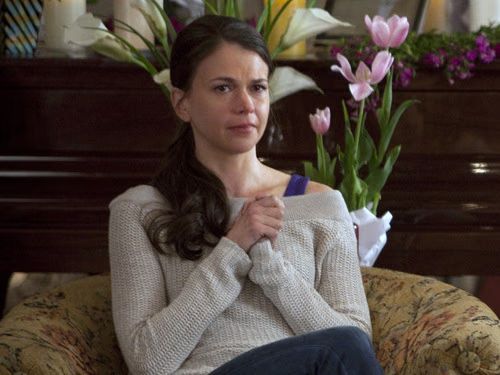
It's a lot heavier than what we might have been prepared for, though I suppose Gilmore Girls had its fair share of melodrama in-between the strumming guitars and disembodied “la-la” voices singing over the establishing shot of every other scene. From Rory Gilmore banging the newly-married Dean, Milo Ventimiglia doing his best Sylvester Stallone-by-way-of-James-Dean, and Lorelai and Luke finally getting together with all its attendant trouble, it's clear Sherman-Palladino knows how to write dramatic cues around her trademark, mile-a-minute dialogue-style. Her penchant for quirky, small town characterizations is well-served here, which makes her forays into melodrama all the more impactful when she actually goes there. Sherman-Palladino also has a penchant for filling her shows with remarkable actors, with Gilmore vet Kelly Bishop and Tony award winner Sutton Foster doing the heavy lifting around a strong cast of young actors and unknowns alike. The development of the relationship between Michelle and Fanny might not be as fun to watch as the relationship between Michelle and Hubbell, yet the talents and on-screen chemistry of Sutton Foster and Kelly Bishop ensures that the journey will be rewarding.
The progress of this development continues in the show's second episode, as Fanny frets over the planning of the memorial like a mother fretting over a wedding reception, worrying about flowers and caterers, while completely shutting Michelle out of the proceedings. It's evident that Fanny is burying her grief in busy work, and merely ignoring Michelle to avoid confronting the issue of why she's even still here, when she was married to Hubbell for only a little over twenty-four hours. Michelle is having her own troubles, attempting to come to terms with what her place is in Paradise, if any, now that Hubbell is gone.
It's a great follow-up to a stellar premiere, elaborating upon the conflict between a woman who is rudderless in life, having cared deeply for her husband even if she didn't really know him or even love him, romantically, and the man's mother, a grief-stricken woman faced with the task of burying her son. It all makes sense why Fanny wouldn't want Michelle involved. Despite their bonding last week, Michelle is still a stranger to Fanny, and it's hard to tell if she sees what Hubbell saw in her at all. Michelle, for her part, is completely unequipped to handle sudden tragedy, though she's armed with snarky witticisms about the tragedy of how no one eats carbs anymore, and how she's inadvertently stolen an old man's dog. These women manage their grief in different ways, with Michelle trying to play the dutiful widow and daughter-in-law (a role fulfilled by the outrageously irritating Truly, who might prove to be among the most annoying televised creations of the past several years if she keeps up at this pace), while Fanny plans an ostentatious life celebration ceremony because she “doesn't do funerals.” The contrasts come to a head as Fanny roars that she doesn't want Michelle's help, that she has no right trying to dictate how to mourn Hubbell. It's a great scene between the two anchors of this show, as Bishop sells the enormity of Fanny's grief, while Foster conveys the frustration that attends Michelle's inability to understand what it's like to lose a son. She wants to be let in, but there are no in-roads for her.
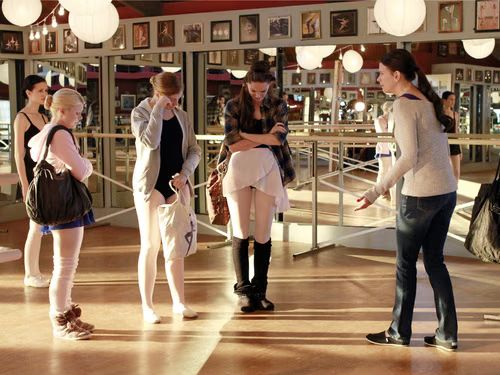
Similar frustration plagues our four “bunheads,” as the teen girls try to sort through what the appropriate course of action is in dealing with such tragedy. Boo feels they should be more reverent and solemn, while Sasha seems content with utilizing their connection to Fanny's grief as an excuse to skip school and go see a Mark Wahlberg movie. However, when Sasha walks in on a grieving Fanny, she feels compelled to do something, going to Michelle for help. This culminates in the staging of a dance tribute at Hubbell's memorial. The act moves Fanny to tears and bonds her to Michelle in a more substantial way, with her introducing Michelle to Hubbell's boyhood friend as her daughter-in-law. Of course, the friend, a lawyer, has one last twist to send us out on: On the way back from Vegas, Hubbell gave him a call to change his will, conveniently enough. The house and all its land and possessions are now Michelle's.
Ignoring the convenience of this last twist as a narrative device to root Michelle to Paradise now that Hubbell is gone (I would have guessed a pregnancy, as a result of their one roll in the hay, and Lord knows it might still happen), Bunheads has a ton of potential, with a central relationship that has the potential to be fascinating, even rewarding, while also being quirky, cleverly-written, and genuinely funny. However, many of these characters, like Sasha and Truly, have the potential to become annoying very quickly, as many of the residents of Stars Hollow eventually became. That said, I anticipate that, much like the bond between Lorelai and Rory Gilmore would overcome the occasional obnoxiousness of the townspeople, Michelle and Fanny will do the same for the inhabitants of Paradise. If nothing else, there are too few shows like this on television. Bunheads is primarily populated by women, mostly adults, in a scenario that is as light and airy as it is fraught with potential substance. That alone is worth notice, particularly in the lean summer TV season.